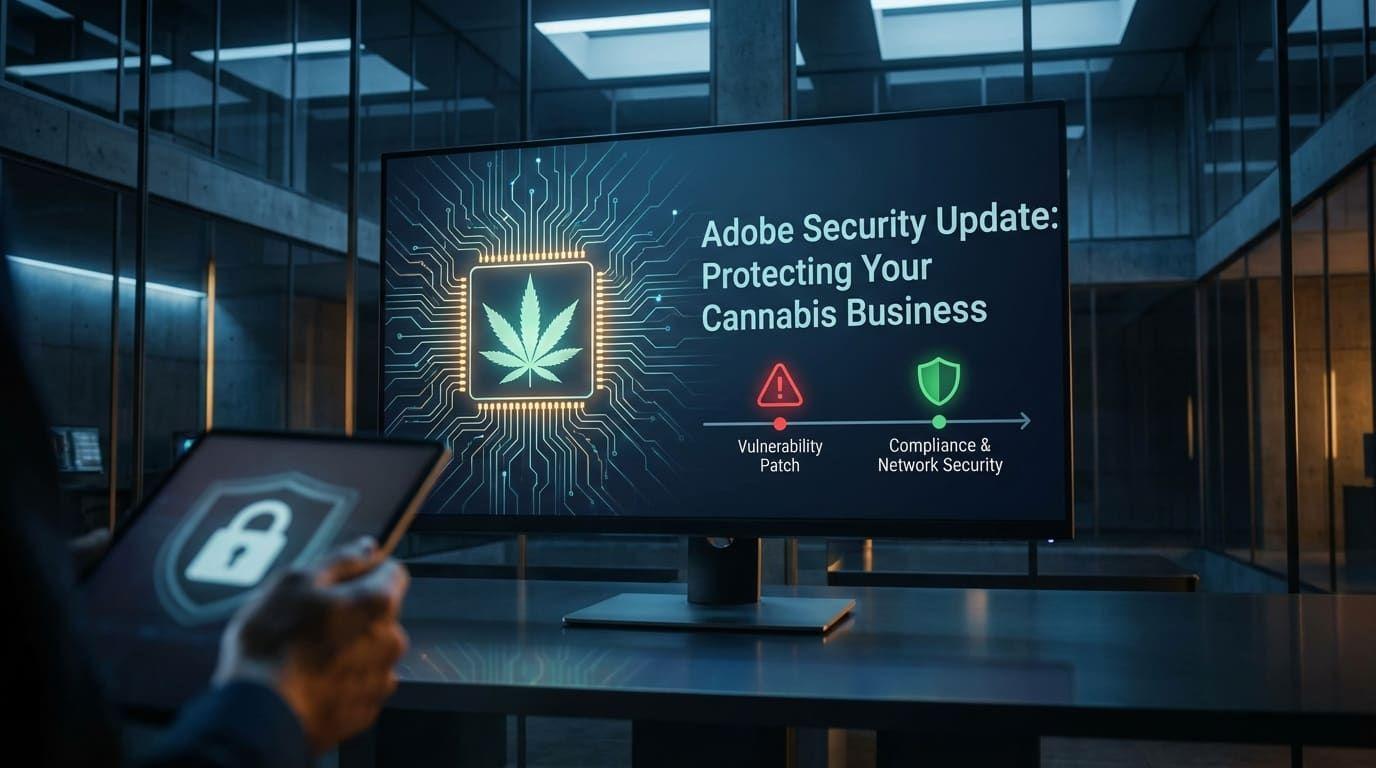
The cannabis industry runs on aesthetics. Top-shelf branding commands top-shelf prices, and your packaging is the first thing the consumer sees. But the software building your brand just became a critical liability.
Adobe recently patched 40 vulnerabilities across its Creative Cloud suite—including Photoshop, Illustrator, and After Effects.
For the average user, this is a nuisance. For a cannabis operator, this is a backdoor into your regulated data.
The Core Problem: A Trojan Horse in a .PSD
The vulnerabilities Adobe fixed are severe. Several are classified as "Arbitrary Code Execution."
Here is the scenario: Your marketing manager receives a design file from a freelancer or downloads a template for your new packaging. They open it in Photoshop.
Because of these unpatched flaws, that simple action executes malicious code. The attacker now has control of that workstation.
The "So What?" for Cannabis: In many cannabis SMBs, network segmentation is nonexistent. The marketing laptop often sits on the same Wi-Fi network as the inventory management system, the Metrc/BioTrack terminal, and the executive suite.
If a hacker compromises the creative team, they can pivot laterally across your network. They aren't looking for your logo designs; they are hunting for investor data, patient records, and the compliance logs required to keep your license active.
The Strategic Blueprint
You cannot stop using Adobe, but you can stop the risk from bleeding into your operations.
1. Enforce Aggressive Patch Management Do not rely on your creative team to hit "update." Creative professionals often delay updates to avoid disrupting their workflow or breaking plugins. As a business leader, you must enforce a policy: Critical security updates happen within 24 hours of release. Verify that your entire fleet is running the latest versions of Creative Cloud today.
2. Segment Your Network This is GRC 101. The devices used for graphic design and social media should never be on the same network segment as your Point of Sale (POS) or compliance servers. Isolate the creative department. If they get hit, the breach stays contained in their sandbox and doesn't touch your seed-to-sale tracking.
3. Vet Your Digital Supply Chain Cannabis brands share massive files with third-party agencies, printers, and packaging vendors constantly. Every external file is a potential threat. Implement endpoint detection and response (EDR) tools that scan these files before they execute, rather than relying on standard antivirus that will miss a sophisticated payload.
The vCISO Perspective
"Creative departments are historically the 'Wild West' of corporate IT. They require administrative privileges, use heavy software, and constantly transfer files externally. This makes them a high-value target for attackers. Do not treat a design workstation like a standard office PC. It requires stricter monitoring and total isolation from your critical compliance infrastructure."
The Bottom Line
Beautiful packaging sells product. Secure operations keep you in business.
Don’t let a vulnerability in an Illustrator file be the reason you have to report a data breach to state regulators. Button up your endpoints and keep your creative assets separate from your compliance assets.
Is your network segmented correctly to handle a breach in marketing? If you aren't sure, you’re already at risk.
[Contact CannaShield CT for a Strategic Security Audit today.]
Source: https://www.linkedin.com/pulse/adobe-fixes-40-vulnerabilities-across-its-creative-f22ie/
Don't gamble with your license or your data.
At CannaShield CT, we provide Virtual CISO and GRC expertise to keep your operation secure and compliant.